
Colorful favicon for AI Quick Bytes, a futuristic AI media site.
update
AI Quick Bytes
update
  • Home
  • Categories
    • AI News
    • Open AI
    • Forbes AI
    • Copilot
    • Grok 3
    • DeepSeek
    • Claude
    • Anthropic
    • AI Stocks
    • Nvidia
    • AI Mishmash
    • Agentic AI
    • Deep Reasoning AI
    • Latest AI News
    • Trending AI News
    • AI Superfeed
March 12.2025
3 Minutes Read

Battle of AI Chatbots: Who Wins in the Clash of Claude and Gemini?

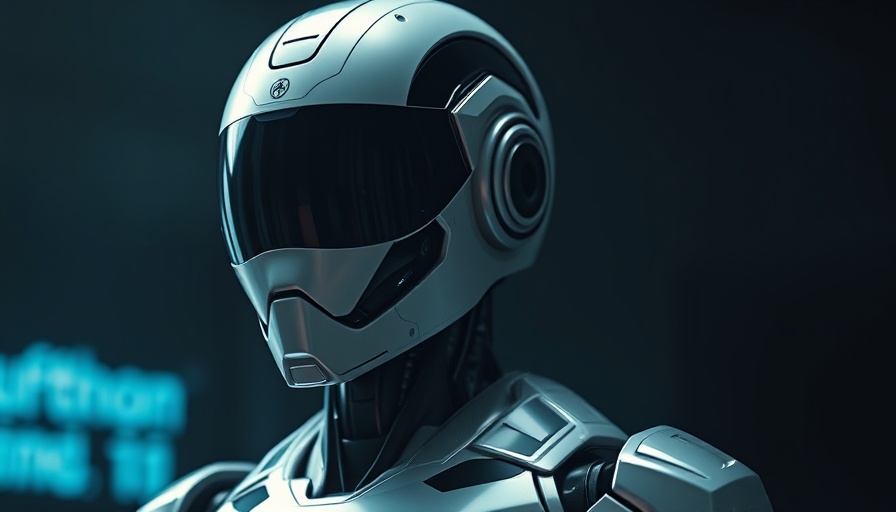
Futuristic humanoid robot reflecting light in dark setting, Claude AI.

Understanding the Showdown: Claude vs. Gemini

Artificial intelligence chatbots have quickly become integral to many businesses, remarkably transforming how we interact with technology. At the forefront of this revolution are two significant contenders—Claude, developed by Anthropic, and Gemini, designed by Google DeepMind. Each brings unique strengths, models, and objectives to the table, making the competition between these two AI systems a fascinating area of exploration.

The Foundations of Claude and Gemini

Understanding the origins of Claude and Gemini provides context to their current capabilities. Claude has been crafted with a focus on safety and alignment, prioritizing ethical interactions that reduce harmful outputs. Its constitutional AI principles serve as a guide for Claude's development, making it ideal for responsible AI applications where ethical considerations are paramount. On the other hand, Gemini is engineered with versatility in mind, boasting capabilities in multimodal AI that integrates text, images, and more for varied applications—from creative writing to complex research tasks.

Performance Insights and Use Cases

When putting Claude and Gemini through their paces, performance emerges as a critical differentiator. Claude excels in providing thoughtful and contextually aware responses. It's particularly adept in areas like creative writing and ethical reasoning, making it a preferred choice for applications that value nuanced understanding—such as legal analysis and customer interactions.

Contrastingly, Gemini shines with its powerful processing capabilities, enabling it to handle complex queries and provide high-quality responses. The integration with Google's ecosystem enhances its usability across diverse fields, significantly benefitting research, business automation, and skill-based applications like coding.

Diving into Technical Differences

The architecture of Claude and Gemini reveals different research trajectories and methodologies. While both employ transformer architecture, Claude emphasizes interpretability and alignment over scale—a design decision stemming from its founding principles aimed at minimizing biases and harmful outputs. In contrast, Gemini supports advanced multimodal processing, allowing interaction with various data types, reflecting a more expansive approach to AI development.

Ethics and Security Challenges

As AI chatbots progress, ethical considerations become more pressing. Claude implements its safety measures by adopting a constitutionally guided approach that seeks to curtail biases and harmful information generation. This thoughtful architecture contrasts with Gemini's more expansive information access, which, while enabling real-time data usage, raises questions about potential inaccuracies and bias, as highlighted by AI experts.

Applying Claude and Gemini: Real-World Scenarios

The true measure of these AI chatbots lies in their application. For instance, when tasked with coding, Claude can generate functional Python code snippets that run effortlessly right from the start, making it appealing to developers seeking immediate solutions. Meanwhile, Gemini, although proficient in problem-solving, sometimes falls short in providing as clear an initial output, demanding that users engage more with its prompts to refine their results.

A practical application could involve Claude being utilized in customer service to handle inquiries about product details or ethical dilemmas. Gemini, with its business automation abilities, might be better suited to manage data analysis tasks or creative brainstorming sessions.

The Verdict: Who Reigns Supreme?

The competition between Claude and Gemini is intense, with each model showcasing impressive capabilities in their unique facets. While Claude garners points for its focus on safety and thoughtful responses, Gemini holds its own with unmatched versatility and integration capabilities within Google’s suite of tools. Ultimately, the choice between these two AI systems may boil down to the specific needs of their users—whether they prioritize ethical interactions or versatility in multimodality. As advancements continue, both Claude and Gemini signify the promising future of AI in transforming our workflows.

As we navigate this rapidly evolving tech landscape, the ongoing development of capabilities in AI chatbots serves as a reminder of the potential they hold in reshaping our interactions with technology. Staying informed and engaged with these advancements is not just crucial for tech enthusiasts but essential for everyone in today’s digital environment.

Claude

4 Views

Write A Comment

*
*
Please complete the captcha to submit your comment.
Related Posts All Posts
05.23.2026

Claude AI Is Transforming How Investors Make Decisions: Here’s Why

Update The Rise of Claude AI: Revolutionizing Investment Strategies In recent months, artificial intelligence (AI) has surged beyond a mere technical novelty, becoming a fundamental driver of investor sentiment across the technology sector. At the forefront of this revolution is Claude, an advanced AI system designed to streamline, automate, and enhance business processes, making it a game-changer in investment decision-making. Understanding Claude AI's Impact on Investment Claude, developed by Anthropic, stands apart from traditional software by offering a flexible, adaptable platform that assists in a vast array of business tasks. Unlike conventional tools that tackle discrete tasks—customer relationship management or cybersecurity—Claude enables businesses to perform various functions by communicating through natural language prompts. This multifaceted capability allows for quicker development cycles, creating everything from software prototypes to data analysis tools, all of which can significantly reduce operational timelines. Market Reactions: Anxiety Amidst Innovation With the introduction of such transformative technologies, investors are grappling with uncertainty regarding the future of established software companies. As Zachary Hill, head of portfolio management at Horizon, highlighted in a recent interview, the technological shift presented by Claude may increase anxiety among software traders. Companies that previously dominated various niches may find their business models challenged as AI democratizes access to custom workflows and analytics, ultimately lowering the dependency on multiple vendor solutions. Lessons from Historical Technological Shifts This current transition mirrors historical technological disruptions, such as the advent of the Internet or electrification, where initial excitement often oscillated between enthusiasm and apprehension. Industries adapted, eventually embracing new methods to enhance productivity and efficiency. For instance, while early investment in AI may cause heightened volatility in stocks today, its long-term potential for increased economic growth and improved standards of living is well-documented. Equity Research: How Claude is Changing the Game Investors are quickly leveraging Claude for conducting equity research. With its abilities to access real-time data from financial databases and facilitate live portfolio analysis, Claude has become a powerful tool for making informed investment decisions. Analysts like Michael Fritzell have begun documenting precise methodologies for employing Claude in stock analysis, covering everything from assessing competitive advantages to projecting earnings. The AI can effortlessly parse through lengthy SEC filings, financial documents, and market news, providing succinct summaries that inform trading strategies. Future Predictions: What Lies Ahead? The trajectory of AI's influence on finance is poised for an exponential trajectory. The tools are evolving rapidly, as seen with Claude’s recent enhancements such as Claude Cowork, which allows users to automate complex tasks directly from their computer. Anticipating AI's full-market integration raises critical questions: How will traditional firms adapt, and what new category of businesses will emerge? As utilization expands, the marketplace will witness shifts in competitive advantage toward those who can effectively harness these technologies. Common Misconceptions About AI and Investment A significant misconception remains that AI will completely replace the need for human analysts. In reality, Claude and similar tools are meant to augment human capabilities, providing a high-impact, support-based approach to research that retains personal supervision and strategic oversight. The role of the investor will evolve into one that focuses on verification and qualitative insights, leveraging AI-generated data to inform objectives and adapt strategies effectively. Decisions You Can Make With AI Insights Investors can capitalize on the current AI boom by integrating tools like Claude into their investment frameworks. By adopting AI for live monitoring of stock movements and reactive analysis of market trends, individual investors and large firms alike can position themselves to respond swiftly to changes. Utilizing Claude for deeper insights into individual companies, sectors, or trends ensures that investment choices are bolstered by data-driven analysis, rather than relying purely on intuition or outdated methodologies. As the landscape of business intelligence continues to evolve through AI innovations, now is the ideal time for both new and seasoned investors to explore how these advancements can reshape their approach to investing. With tools like Claude at their disposal, the potential for higher returns and more precise market insights is unprecedented.

05.23.2026

High-Agency Generalists: The Key to Thriving in the AI Era

Update Understanding the Role of High-Agency Generalists in the AI Era In an age defined by rapid technological advancements, the emergence of high-agency generalists is reshaping how industries operate and adapt, particularly in the realm of artificial intelligence (AI). Sid Bidasaria, the co-creator of Claude, emphasizes that these versatile professionals will play a critical role in navigating the complexities introduced by AI technologies. The Evolution of Generalists and Their Importance in AI Unlike specialists who focus narrowly on one area, high-agency generalists possess a broad range of skills that allow them to tackle diverse problems and adapt to changing environments. Bidasaria highlights that the ability to connect dots across various domains is vital as AI continues to expand its influence across sectors such as healthcare, finance, and education. The Dynamic Landscape of AI and Its Challenges As AI technologies evolve, new challenges and considerations arise. For instance, the rise of machine learning and optimization techniques places increasing demand on professionals who can synthesize data while thinking creatively about implementation. Bidasaria suggests that high-agency generalists are well-suited for this task, as they thrive in ambiguity and can generate innovative solutions. Real-World Impact: Stories of Generalists Making a Difference One notable example is the use of AI in healthcare. High-agency generalists have led successful implementations of AI systems that streamline patient care while ensuring ethical considerations are adhered to. Their holistic approach enables them to assess technology from multiple angles, providing a balanced perspective that specialists may overlook. Future Predictions: High-Agency Generalists Redefining Work Looking ahead, the demand for high-agency generalists is projected to grow significantly. Companies across various sectors are beginning to recognize the value these individuals bring, as their adaptability will be crucial in harnessing the full potential of AI. Bidasaria predicts that as AI advances, careers will increasingly center on collaboration among generalists, specialists, and AI tools, leading to innovative breakthroughs. Actionable Insights for Future Professionals For those looking to thrive in this evolving landscape, developing a diverse skill set, actively seeking collaborative opportunities, and embracing continuous learning are vital. High-agency generalists will need to blend technical knowledge with soft skills such as communication and problem-solving to remain competitive. Conclusion: Embracing Change in a High-Agency World As we move deeper into the AI era, the rise of high-agency generalists signifies not only a shift in workforce dynamics, but also a promising future where innovation flourishes. To stay ahead, future professionals should embrace this multifaceted approach and prepare for the exciting challenges that lie ahead in the age of AI.

05.23.2026

How High-Agency Generalists Will Shape the Future of AI, According to Sid Bidasaria

Update Defining the Future: High-Agency Generalists and their Role in AI In an ever-evolving technological landscape, artificial intelligence (AI) is reshaping industries and work paradigms. Sid Bidasaria, co-creator of Claude Code at Anthropic, highlights the emergence of "high-agency generalists" as pivotal players in defining the future of AI-driven interfaces and tools. These individuals bridge the gap between various professional domains, fostering innovation and collaboration across traditionally siloed roles. What Does it Mean to be a High-Agency Generalist? Bidasaria notes that the rise of AI blurs the lines that previously separated engineers, product managers, data scientists, and designers. These high-agency generalists possess a diverse set of skills that allow them to navigate these roles more fluidly. Instead of being confined to one niche area, they can adopt a holistic approach, making them invaluable in environments where adaptation and rapid iteration are critical. The Technology Behind Claude Code Claude Code serves as a testament to this shifting landscape. Initially designed with engineers in mind, it rapidly became a tool embraced by non-technical users in business environments. As employees from various departments increasingly turn to AI applications to enhance productivity, Claude Code adapts to meet these broadening needs. Influence of Indian-Origin Leaders in AI Bidasaria is part of a larger trend of Indian-origin leaders influencing key advancements in AI technology. Alongside other prominent figures such as CFO Krishna Rao and CTO Rahul Patil at Anthropic, this community is shaping the future of AI on a global scale. With their roots in India, which has emerged as a hub for technology innovation, these leaders offer fresh perspectives and insights integral to the evolution of AI technologies. Networking across Domains: The Rise of Cross-Pollination As AI tools like Claude Code permeate various sectors, collaboration across roles has never been more crucial. Bidasaria emphasizes that effective communication and teamwork among high-agency generalists can drive groundbreaking advancements. This collaborative spirit is essential for organizations looking to thrive in an AI-dominated market. Preparing for the Future with AI For businesses and professionals, understanding the impact of AI and the role of high-agency generalists is critical. Companies that invest in training and cultivating a workforce capable of navigating these changes will find themselves better positioned in the competitive landscape. Bidasaria encourages organizations to embrace this shift and promote a culture that values diverse skills and interdepartmental collaboration. Conclusion: A Call to Action for Professionals The emergence of high-agency generalists signals a transformative era in the interaction between technology and human expertise. Whether you're an engineer, a business analyst, or a creative, the ability to adapt and leverage AI tools like Claude Code will be crucial for success. As the AI landscape continues to evolve, professionals must embrace lifelong learning and collaboration to navigate the challenges and opportunities ahead.

Terms of Service

Privacy Policy

Core Modal Title

Sorry, no results found

You Might Find These Articles Interesting

T
Please Check Your Email
We Will Be Following Up Shortly
*
*
*