


Introducing Aardvark: The AI Security Partner of Tomorrow
OpenAI's latest innovation, Aardvark, marks a significant milestone in the integration of artificial intelligence (AI) within software development processes. This autonomous security agent, powered by the advanced GPT-5 model, is designed to act much like a human security researcher. Its primary function is to continuously scan, analyze, and patch vulnerabilities in code, thereby embodying the concept of 'agentic AI'—where AI systems take proactive roles in real-world applications.
How Aardvark Works: A New Era of Automated Security
Aardvark offers a sophisticated approach to code security that goes beyond traditional tools. Instead of simply flagging suspicious code snippets, this AI assesses code semantics and behaviors, mimicking the thought process of a human analyst. By embedding itself directly into development workflows, Aardvark enables continuous monitoring of code repositories. This not only helps catch potential vulnerabilities early but also ensures that security is ingrained in the software development lifecycle.
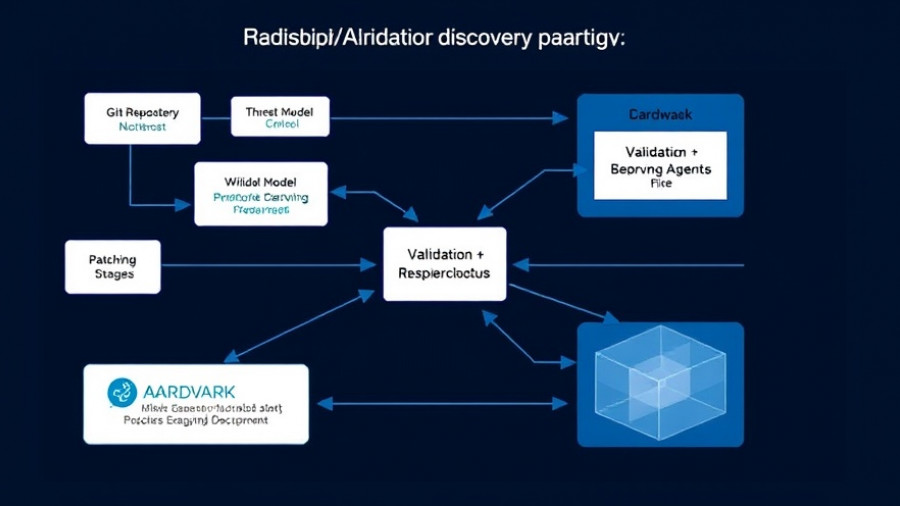
The agent starts its operation by creating a contextual threat model based on the complete codebase it analyzes. It then monitors ongoing code changes to detect any deviations that introduce new risks while checking for existing issues. Upon identifying a vulnerability, Aardvark validates its exploitability in a secure environment, significantly minimizing false alarms that plague many static analysis tools.
Aardvark vs. Traditional Security Tools: Elevating the Game
OpenAI’s approach represents a paradigm shift compared to conventional security measures, which often provide a reactive stance at the end of the development cycle. Traditional tools can overwhelm developers with alerts and false positives, leading to alert fatigue. In contrast, Aardvark’s validation process—confirming vulnerabilities before alerting developers—promises to reduce these instances dramatically. With benchmark tests showing that it can identify 92% of preexisting vulnerabilities, Aardvark is set to become an invaluable resource for developers.
The Impact on Open Source and Collaborative Security
Beyond enterprise software, Aardvark has already shown its potential in the open-source domain, having identified ten vulnerabilities that received CVE identifiers. OpenAI is committed to supporting the open-source community by providing vulnerability scanning services pro bono, emphasizing a collaborative approach to software security. This initiative highlights the growing recognition that code security is not just a private concern; it’s a shared responsibility.
Shifting Security Left: A Strategic Advantage
The introduction of Aardvark resonates with the industry's drive to 'shift left' in software security—integrating security checks into earlier stages of the development process. As more than 40,000 vulnerabilities are reported annually, having an AI-powered tool that simplifies the identification and remediation of security flaws aligns with modern development practices that prioritize speed without sacrificing quality.
What the Future Holds: Real-World Applications and Implications
The deployment of Aardvark is not merely a technological advancement but a harbinger of future trends where collaborative AI tools will support smaller teams managing significant security tasks. It’s expected that Aardvark will change the landscape of security management by reducing the burden on security teams, helping them focus more on strategy and less on manual checks. As this type of AI continues to evolve, organizations may find that security can become a seamless part of their development cycles rather than an isolated concern.
Conclusion: Embracing the Agentic AI Revolution
In summary, OpenAI’s Aardvark represents the dawn of a new era in software security, marking the intersection of AI technology and human expertise. As organizations prioritize security without hindering development velocities, tools like Aardvark stand to become essential allies. The future of software development will likely be shaped by continuous partnerships between human expertise and autonomous AI agents, enabling smarter, safer code delivery.


Write A Comment