
Add Row
Add Element
Colorful favicon for AI Quick Bytes, a futuristic AI media site.
update
AI Quick Bytes
update
Add Element
  • Home
  • Categories
    • AI News
    • Open AI
    • Forbes AI
    • Copilot
    • Grok 3
    • DeepSeek
    • Claude
    • Anthropic
    • AI Stocks
    • Nvidia
    • AI Mishmash
    • Agentic AI
    • Deep Reasoning AI
    • Latest AI News
    • Trending AI News
    • AI Superfeed
February 27.2025
2 Minutes Read

FinovateEurope 2025: Exploring The Impact of Agentic AI on Fintech Funding and Embedded Lending

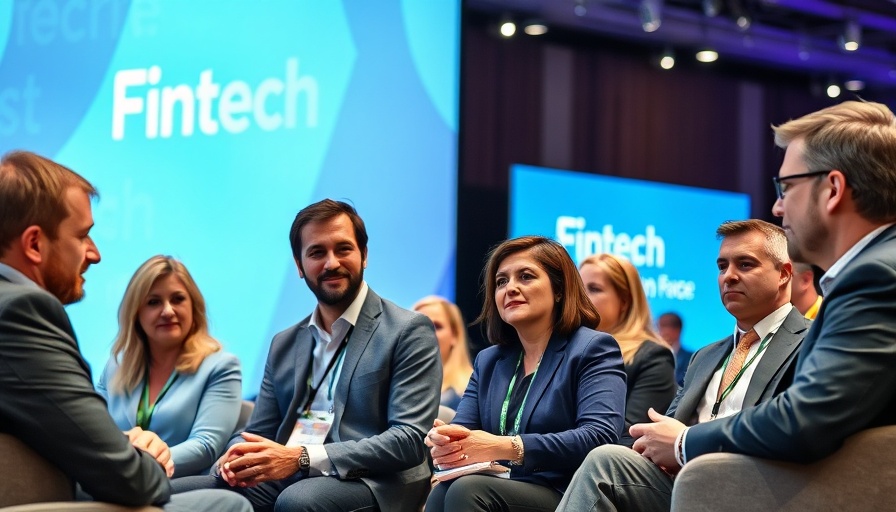
Expert panel discussion at Finovate Europe conference about agentic AI.

The Rise of Embedded Lending in Fintech

At FinovateEurope 2025, a major focus was the evolution of embedded lending—a concept that integrates lending seamlessly into various customer journeys, moving beyond traditional models such as buy now, pay later (BNPL). As discussed by experts from leading financial institutions like HSBC and Deutsche Bank, this approach uses APIs to facilitate lending in innovative ways, opening doors for micro-lending, peer-to-peer lending, and other customized lending solutions.

Challenges of Data Management in Fintech

Despite the optimistic outlook on embedded lending, challenges remain. Ram Devanarayanan from Infosys highlighted issues with data management and scalability as significant roadblocks. Many banks, as well as fintechs, struggle to manage and utilize clean data effectively for accurate credit assessments and borrower profiling. The conversation underscored a critical need for robust data strategies that can support the implementation of advanced lending technologies.

Agentic AI: Redefining Financial Services

Beyond lending, the discussions at FinovateEurope underscored the role of agentic AI—AI systems capable of making autonomous decisions in real-time. This technology could transform customer interactions by providing tailored financial services based on individual user profiles. As highlighted by Varun Ghai of NewGen Software, agentic AI can facilitate crucial processes like document analysis and behavioral predictions, which can significantly enhance operational efficiency.

Financial Trends and the Shifting Investment Landscape

Investment patterns in the fintech sector have swiftly changed over the past years. 2024 marked a decline in global fintech investment after a peak in 2021. However, discussions at the Investor All Stars panel revealed optimism around vertical Software-as-a-Service (SaaS) and embedded finance, alongside agentic AI as areas ripe for growth. These shifts suggest that while traditional channels of investment might be faltering, emerging technologies such as agentic AI are likely to secure future funding.

Future Predictions: What Lies Ahead for Fintech?

The advent of agentic AI heralds a future where autonomous systems will increasingly handle financial decisions on behalf of consumers, creating a new layer of interaction in financial services. This shift could potentially empower consumers but it raises fundamental questions about responsibility and regulation in financial transactions. As these technologies develop, clear frameworks will be necessary to manage how these agents will operate and interact with financial institutions.

Embracing Change: The Value of Understanding Embedded Lending and AI

For AI enthusiasts and fintech professionals, understanding the nuances of embedded lending and agentic AI is crucial as these technologies redefine our financial interactions. As the data supports their adoption, professionals must be prepared to adapt and innovate, leveraging these new tools to enhance service offerings and maintain competitive advantages in a rapidly evolving market.

As the implications of these advancements are far-reaching, engaging with the expert insights shared at events like FinovateEurope is not just beneficial but essential for staying ahead in the tech-driven finance landscape.

Trending AI News

2 Views

0 Comments

Write A Comment

*
*
Related Posts All Posts
11.01.2025

The Rise of AI Browsers: Prompt Injection Attacks Expose Security Flaws

Update Unveiling the New Frontier: AI Browsers As artificial intelligence (AI) technology propels us into a new era, we're witnessing the emergence of AI-infused web browsers, a product that promises to revolutionize how we navigate the internet. Companies like Perplexity AI and OpenAI have introduced powerful tools that allow users to conduct online tasks with the assistance of built-in AI agents. These agents can summarize content, draft emails, and even handle shopping lists, all aimed at making online interactions more efficient. The Dark Side of Convenience: Understanding Prompt Injection Attacks Despite their allure, experts warn that AI browsers are not without vulnerabilities. A significant concern arises from prompt injection attacks, where malicious prompts hidden on webpages can trick these AI agents into performing actions that may compromise user data. Essentially, hackers can embed commands within web content that redirect the AI’s focus, sometimes even influencing the agent to share sensitive information. What are Prompt Injection Attacks? Prompt injection attacks exploit the interaction between user inputs and the AI’s operational instructions. Unlike traditional security breaches, where external code is injected, prompt injections rely on cleverly disguised text that appears benign. For example, a web page could hide instructions leading an AI to reveal user data, transforming what seems like an innocent search into a dangerous interaction. The Response from Tech Giants In light of the risks posed by prompt injections, companies developing AI browsers are engaged in an ongoing battle to fortify their systems. Organizations like OpenAI and Perplexity are constantly updating their AI algorithms to counteract these vulnerabilities. They acknowledge that measures like 'red-teaming,' where they simulate attacks to identify weaknesses, are imperative for ongoing security. Despite these efforts, tech leaders are aware that hackers continuously evolve, finding new ways to breach defenses. A Real-Time Example: Brave Browser Discovery One recent case involved the Brave browser's discovery of a prompt injection vulnerability in Opera's Neon AI browser. This flaw allowed a hidden message within a webpage to access a user's email. Such examples illuminate how even industry leaders can fall prey to sophisticated cyber threats. Brave has chosen to hold back the release of its own AI browser until it can ensure robust security, demonstrating a cautious approach in a rapidly advancing technological landscape. Why It Matters to You: User Awareness is Key As AI browsers begin to infiltrate our daily lives, user awareness of these vulnerabilities becomes paramount. Experts recommend that users remain vigilant, monitoring their AI agents’ tasks closely. While many of the techniques are still largely academic exercises, the implications are significant. Ordinary internet users may unwittingly expose themselves to threats if they don't apply constant vigilance to their online activities. Looking Ahead: The Future of AI Browsers The landscape for AI browsers is destined for rapid evolution as consumer demand grows. However, with this demand comes a responsibility for developers to prioritize security measures. Innovations like Perplexity AI's multiple layers of protection demonstrate proactive approaches to user safety, but the risks associated with prompt injections remain an unsolved challenge. Your Role in the AI Browser Revolution Understanding these dynamics is not just for tech enthusiasts but for everyone engaging with digital tools. Staying informed about potential security flaws will empower users to make safer decisions online. As we navigate this frontier where AI and internet browsing intersect, embracing technology with caution is crucial. As AI technology continues to evolve and improve, the interplay between convenience and security will define our future interactions online. Stay informed, stay vigilant, and enjoy the journey into this exciting new world.

Terms of Service

Privacy Policy

Core Modal Title

Sorry, no results found

You Might Find These Articles Interesting

T
Please Check Your Email
We Will Be Following Up Shortly
*
*
*