Colorful favicon for AI Quick Bytes, a futuristic AI media site.
update
AI Quick Bytes
update
  • Home
  • Categories
    • AI News
    • Open AI
    • Forbes AI
    • Copilot
    • Grok 3
    • DeepSeek
    • Claude
    • Anthropic
    • AI Stocks
    • Nvidia
    • AI Mishmash
    • Agentic AI
    • Deep Reasoning AI
    • Latest AI News
    • Trending AI News
    • AI Superfeed
August 18.2025
3 Minutes Read

Google Gemini's Triumph: Previous Barriers in Deep Reasoning AI Broken

Hand typing with floating math equations, deep reasoning AI theme

AI's Groundbreaking Achievement at the International Mathematical Olympiad

Google's Gemini Deep Think has set a remarkable precedent in the world of artificial intelligence (AI) by becoming the first AI system to win a gold medal at the prestigious International Mathematical Olympiad (IMO). This marks a significant advancement for AI capabilities in mathematics, a field where machines have traditionally struggled. The achievement was highlighted in a recent article by Cade Metz in The New York Times, showcasing how this milestone represents not just a victory for AI, but an evolution in its reasoning capabilities.

The Evolution of AI in Mathematics

Historically, AI models have encountered hurdles when tackling complex mathematical problems. Last year, for instance, Google's AI secured a silver medal but required human intervention to translate mathematical questions into a programming language it could process. In stark contrast, this year's competition revealed that the Gemini Deep Think could engage with mathematical problems in natural language, allowing it to read and answer questions as human participants did. It completed the exam in 4.5 hours, matching the timeframe of its human counterparts, which is a testament to its growing capabilities.

The Nuances of Human vs. AI Reasoning in Mathematics

Despite this astounding progress, the AI's limitations remain evident. Out of six challenging mathematical problems, the best AI managed to solve five. The failure came on a particularly tricky question from the realm of combinatorics, a subfield known for its intricate counting and arrangement challenges. Experts suggest that the reasoning required to approach such problems demands a blend of creativity, intuition, and out-of-the-box problem-solving—qualities uniquely human.

Ben Cohen elaborates on this in The Wall Street Journal, noting that although AI can generate impressive results, the gold medalist Qiao Zhang, a 17-year-old from MIT, expressed concern about the day AI could solve such complex problems consistently. This sentiment encapsulates the ongoing debate about the limits of AI reasoning compared to human ingenuity.

Beyond Math: Implications for AI's Future

The implications of AI's achievements in mathematics extend far beyond the competition itself. As AI continues to develop deeper reasoning capabilities, its applications could revolutionize various fields, from scientific research to advanced problem-solving in industry settings. Emerging technologies are expected to benefit immensely, given that mathematical reasoning forms the backbone of numerous disciplines.

However, it is crucial for society to consider the ethical implications of AI advancements. As AI becomes more adept at tasks traditionally held by humans, questions around accountability, creativity, and problem-solving in areas outside of mathematics arise. What happens when machines can outperform humans in tasks that were once seen as uniquely human?

Understanding Deep Reasoning AI: The Future is Here

As we marvel at the success of AI, it's essential to grasp the essence of deep reasoning AI—an area that lies at the intersection of mathematics, logic, and semantic understanding. Rather than merely crunching numbers, advancements in deep reasoning AI signify a shift toward systems that can interpret and engage with information as humans do. This evolution calls for more robust frameworks to harness AI's potential while safeguarding against its misuse.

For those interested in deep reasoning AI, understanding how these systems process information compared to human cognition offers crucial insights. While machines parse data via tokens, humans approach it holistically. Recognizing this difference is vital when addressing the future of AI and its capabilities.

AI and Increasing Mathematical Literacy

Efforts to enhance AI's mathematical prowess dovetail with broader initiatives aimed at increasing mathematical literacy globally. With programs aimed at integrating math education and technology, particularly in underserved communities, there's a growing momentum to equip future generations with the skills to engage with advancements like Gemini. Empowering younger generations to master math can create a collaborative future where AI complements human intelligence rather than replacing it.

Conclusion: A Call to Reflection

The leaps made by Google’s Gemini Deep Think serve as both inspiration and a reminder of the remarkable progress in AI capabilities. It emphasizes the need for continuous dialogue about AI's role in education, mathematics, and various industries. Readers are encouraged to reflect on what these advancements mean for our society and how we can participate in shaping a future where AI and human intelligence coexist and thrive.

Deep Reasoning AI

1 Views

Write A Comment

*
*
Please complete the captcha to submit your comment.
Related Posts All Posts
05.14.2026

Understanding Deep Reasoning AI: Karpathy's Vision for Human-Like Intelligence

Update A New Era in AI: Human-Like Reasoning is Crucial In a groundbreaking discussion at the AI Ascent event, Andrej Karpathy, a former director of AI at Tesla, challenged the tech community to rethink artificial intelligence. Central to his message is an urgent need for AI models to evolve beyond simple pattern recognition and develop true human-like reasoning capabilities. As the landscape of AI rapidly shifts, understanding this evolution is more critical than ever. From Programming to Intelligent Prompting Karpathy noted a pivotal shift in AI development — transitioning from traditional software programming to prompt-based models exemplified by advances such as GPT-3. In previous models, developers dictated explicit rules and logic. Now, the interaction lies in crafting effective prompts that elicit desired behaviors from these advanced AI systems. This represents a fundamental evolution in how we conceptualize and build intelligent systems. Bridging the Reasoning Gap A core theme throughout Karpathy’s presentation was the limitations of current AI models. While these systems impress with their capacity to produce coherent text and complete assigned tasks, they often function more as advanced pattern-matching machines than entities capable of genuine comprehension. Karpathy pointed out that these models frequently fail in tasks requiring deep causal reasoning or understanding nuanced contextual information — capabilities intrinsic to human intelligence. As he stated, “We’re still very much in the realm of pattern matching, and we need to bridge the gap towards true reasoning.” This gap poses serious challenges for reliability and accuracy in critical applications. The Future of AI Development: Shaping Models with Human-Like Reasoning Looking towards the future, Karpathy posited that the next frontier in AI will be developing models that emulate more closely the reasoning processes of humans. By understanding how humans learn and reason, AI architectures can incorporate these principles, paving the way for more reliable and trustworthy systems. “The future lies in bridging the gap between pattern recognition and true understanding,” he emphasized. “We need models that can process information and reason about it, learn from experience, and adapt.” The Importance of Context in AI Reasoning Building on his insights, Karpathy highlighted the significance of the context window in AI models — essentially the 'working memory' of models where actual reasoning takes place. He argued for providing rich context rather than relying solely on the model’s pre-trained weights. This is vital: when given comprehensive context, AI models perform significantly better than when information is distilled or summarized. Challenges Ahead: The Road to Human-Like Cognitive Abilities Despite the remarkable progress in AI, Karpathy indicated we have only scratched the surface in mimicking the human brain's functionality. Key structures of the brain, such as the hippocampus (responsible for memory) and the amygdala (which influences emotions), are absent in today's AI systems. Consequently, while AI can think, it does not yet possess the emotional depth or reflective capabilities characteristic of human cognition. Practical Implications: What This Means for AI Designers Karpathy's thought leadership provides a roadmap for AI designers and developers in building systems with deeper reasoning capabilities. Emphasizing the importance of structured reflection and feedback loops within AI processes, he suggests a move away from traditional reinforcement learning approaches. Instead, he advocates for a system of continuous learning that allows AI to reflect on its own outputs and adapt through self-correcting processes. Conclusion: The Journey is Just Beginning As we consider the future of AI, it is clear that we stand at a significant crossroads. Andrej Karpathy's insights underline an essential truth: to achieve true human-like reasoning, we must bridge the ever-present gap between current AI capabilities and genuine comprehension. As technology continues to evolve, the call for responsible, thoughtful AI development is louder than ever. The journey has just begun, but with approaching these challenges head-on, the potential for transformative growth is limitless. As advancements in AI progress, consider how these insights into deep reasoning and human-like understanding may impact technologies we engage with daily. Getting involved in discussions about AI's trajectory and its implications can help shape a future where AI complements human intelligence more effectively.

05.14.2026

How Small AI Models Are Revolutionizing Deep Reasoning Capabilities

Update Unlocking the Potential of Small AI Models in Deep ReasoningArtificial intelligence (AI) continues its rapid evolution, pushing the boundaries of what machines can understand and achieve. Recent studies indicate that small AI models may hold significant promise for complex reasoning tasks, historically viewed as the domain of their larger counterparts. This transformative insight could reshape our approach to AI development and utilization.Examining the Advantages of Small AIHistorically, the narrative has been clear: bigger models are better. However, emerging data suggests that smaller models, equipped with the right training methods and frameworks, can outperform expectations, particularly in deep reasoning scenarios. Researchers have identified that these smaller models, typically ranging from 1.5 billion to 7 billion parameters, can achieve remarkable accuracies on tasks like mathematical competitions—often ranking them within the top 20% of competitors.One such breakthrough is the rStar-Math method. This approach uses a Monte Carlo Tree Search (MCTS) technique, enabling the decomposition of complex problems into manageable parts while fostering a structured reasoning process. Such strategies not only mitigate the limitations often seen with smaller models but enhance their logical reasoning abilities.Comparison with Traditional Larger ModelsWhile larger models possess vast amounts of information, they still often succumb to challenges in reasoning and comprehension, especially in intricate scenarios that require logical deductions. Instead of providing exploratory and contextual responses, large AI systems primarily lean toward quick, pattern-based outputs. This division underscores the importance of nurturing skills like continuous learning and adaptable reasoning, skills where smaller models may excel.Research from Microsoft has introduced several approaches that aim to bolster both small and large language models. This includes refining structural designs, integrating mathematical reasoning techniques, and advancing generalization capabilities across various disciplines. The goal is clear: it is crucial to build AI that can perform tasks with precision and reliability, particularly in high-stakes fields like healthcare and scientific research.Future Predictions for AI Deep ReasoningAs we progress, the potential for small AI models to dominate the reasoning arena is promising. Their ability to emulate human-like thinking processes—including problem decomposition and flexible strategy adjustment—positions them as agile tools capable of addressing diverse challenges. By embracing new methodologies like Logic-RL, which focuses on structured learning from logical puzzles, these models are set to evolve further, reinforcing their place in the AI landscape.Counterarguments and ChallengesDespite the advantages, skepticism remains about the practical applications of small AI models. Critics argue that the specific context of application plays a crucial role in determining success. For instance, larger models, while slower, may still hold an edge in situations demanding depth over breadth. Hence, the AI community is compelled to strike a balance between exploring smaller models' capabilities while acknowledging their potential limitations.Actionable Insights for AI EnthusiastsFor individuals and organizations looking to leverage AI, understanding small models' potential is crucial. By embracing these models, entities can enhance user experience, improve operational efficiency, and reduce computational costs. Utilizing frameworks like rStar-Math could also empower developers to drive AI projects towards a more feasible and innovative future.The Role of Education and Continuous LearningAs small AI models pave the way to more efficient reasoning, there lies an essential role for education in AI and machine learning. Industry experts and academics must collaborate to create curriculum pathways that encompass emerging technologies and the implications of AI reasoning. By equipping new generations with necessary skills, we ensure that AI continues to progress in a reliable and responsible manner.Conclusion: The Next Steps in AI ReasoningThe findings related to small AI models and their reasoning capabilities prompt a re-evaluation of the potential that rests with emerging technologies. Addressing the limitations faced by both small and large models, researchers are actively pioneering methodologies to strengthen AI’s reasoning prowess. For those eagerly following AI development, the conclusion is clear—staying informed and adaptable is not just advantageous; it’s essential as we navigate this rapidly changing landscape.

10.16.2025

Discover How Ax-Prover Revolutionizes Deep Reasoning AI in Theorem Proving

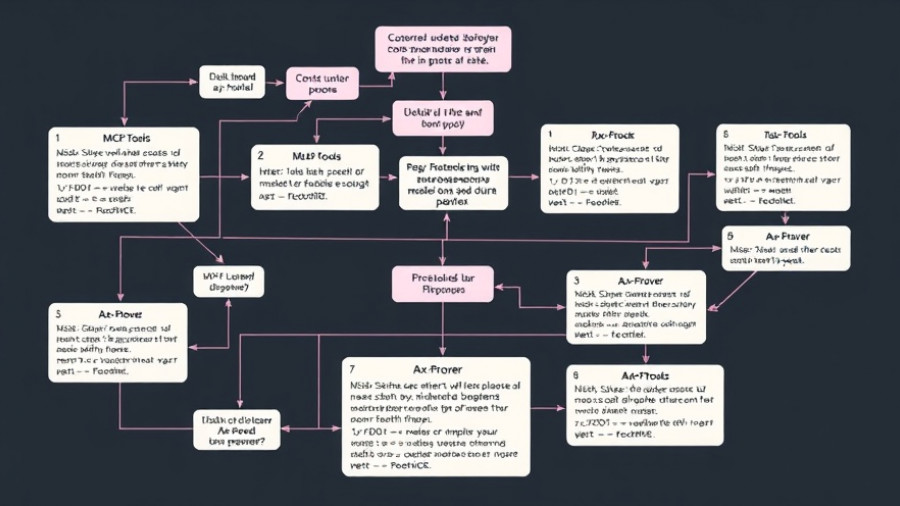
Update Understanding Ax-Prover: An AI Leap Forward in Theorem Proving The emergence of deep reasoning AI with frameworks like Ax-Prover marks an exciting development in both artificial intelligence and formal logic. Designed by a collaboration of researchers from Axiomatic AI and leading experts in science, Ax-Prover represents a multi-agent system that skillfully navigates complex problems in mathematics and quantum physics. By harmonizing the reasoning capabilities of large language models with the rigorous formal tools found in Lean—a well-regarded theorem proving environment—Ax-Prover has begun to pave new pathways in automated theorem proving. Bridging Collaboration Between AI and Humans Traditional approaches to theorem proving have often mandated highly specialized systems, limiting flexibility and application scope. However, Ax-Prover's innovative framework allows for both autonomous functioning and collaborative interactions with human experts. This dual capability is a significant step forward, as it enables mathematicians and physicists to leverage AI while maintaining rigorous formal proof standards. The Role of Large Language Models in Theorem Proving Large language models (LLMs), such as GPT-4 and its contemporaries, form a core part of the Ax-Prover's architecture. These models recognize patterns and natural language elements to facilitate theorem proving processes. Ax-Prover extends this capability by employing LLMs not just as passive tools but as active agents in scientific reasoning. The integration with the Lean environment through the Model Context Protocol allows for fluid transitions between creative problem-solving and strict syntactic rigor, marking a significant advance in the potential for AI applications in STEM fields. Assessing Performance: A New Standard To evaluate Ax-Prover's capabilities, the research team benchmarked the system against best-in-field theorem provers and large language models across established datasets like NuminaMath-LEAN and PutnamBench. Introduced datasets, AbstractAlgebra and QuantumTheorems, helped to assess the framework on less explored but crucial areas in abstract algebra and quantum theory. Remarkably, Ax-Prover has demonstrated not only competitive performance but also superior outcomes when tackling these new benchmarks, suggesting that it is not constrained by traditional limitations of specialised systems. The Future of Automated Theorem Proving The revelations stemming from Ax-Prover prompt a reflection on the future capabilities of AI deep reasoning systems. As these models continue to evolve, the potential for greater integration in professional scientific domains appears promising. With applications now spanning mathematics, physics, and potentially even beyond into other scientific territories, Ax-Prover sets the stage for a new era of automated reasoning. Empowering Scientific Inquiry Through Theorems Imagine a world where mathematicians unchain their creativity, using AI to tackle theorem proving as easily as composing a new idea. Ax-Prover allows for such intellectual freedoms, ultimately empowering humans to focus on creative synthesis rather than rote verification. The collaborative efforts between Ax-Prover and expert mathematicians showcase its assistant capabilities, one example being its aid in formalizing a complex cryptography theorem. Laying the Groundwork for Broader Applications The design philosophy behind Ax-Prover speaks volumes about the future of AI technologies in the natural sciences. By providing tools that not only autonomously prove theorems but also enrich collaborative discussions, researchers harness their creative intellect alongside a powerful reasoning framework. Such amalgamation fuels further exploration and inquiry, propelling both mathematics and quantum physics into exciting new territories. Concluding Thoughts on Deep Reasoning AI As AI continues to deepen its integration into scientific research, frameworks like Ax-Prover are crucial in simplifying complex processes while promoting collaboration. To those fascinated by these advances, it's vital to monitor developments and consider how such technologies can facilitate personal insights and wider societal implications. Stay informed about advancements in deep reasoning AI and explore how these technologies can reshape your understanding of mathematics and science! Sign up for updates on the latest in AI and theorem proving.

Terms of Service

Privacy Policy

Core Modal Title

Sorry, no results found

You Might Find These Articles Interesting

T
Please Check Your Email
We Will Be Following Up Shortly
*
*
*