


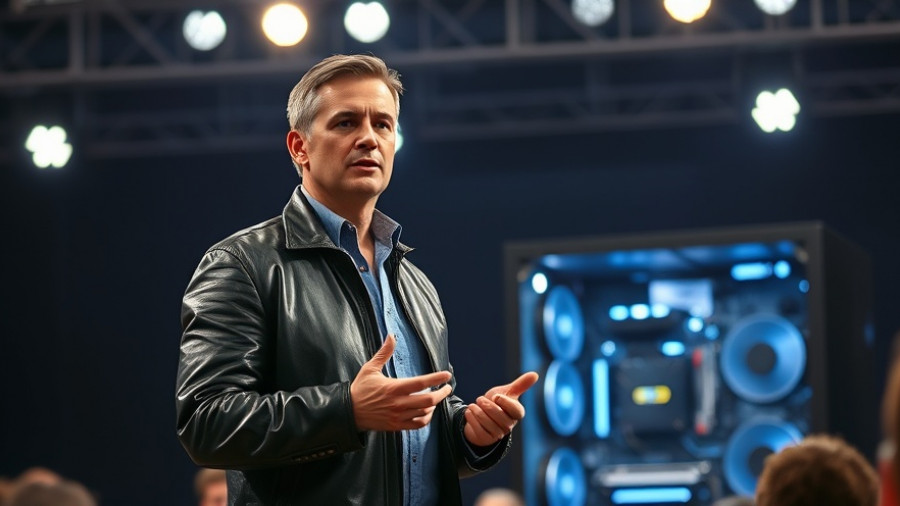
Nvidia's Ambitious Plans for Blackwell Chips in China
Nvidia's CEO, Jensen Huang, is navigating a complex geopolitical landscape as he advocates for the sale of the company's latest Blackwell chips to China. During his recent visit to South Korea, Huang expressed optimism about the potential for these state-of-the-art AI chips to enter the Chinese market. However, he acknowledged that the final decision rests in the hands of U.S. President Donald Trump, a reality that underscores the intersection of technology and global politics.
The Significance of U.S.-China Tensions
The stakes are high, as the ongoing tensions between the U.S. and China over technology exports have given rise to significant challenges for companies like Nvidia. Currently, U.S. export controls limit access to advanced semiconductor technology, particularly those that could enhance China's military capabilities. This dynamic highlights the delicate balance between promoting innovation and addressing national security concerns.
What’s at Stake for Nvidia?
As a leader in AI technology, Nvidia's innovations are at the forefront of the digital revolution. The Blackwell chips are expected to boost AI processing power, making them invaluable in various industries, from healthcare to cloud computing. Therefore, gaining access to the Chinese market represents a considerable opportunity for Nvidia, which has continuously sought to expand its footprint internationally despite regulatory hurdles.
Trump's Influence Over International Tech Trade
President Trump's remarks following meetings with Chinese President Xi Jinping revealed that semiconductor discussions are ongoing, yet he specifically excluded Blackwell from potential sales discussions. This decision further illustrates how political leadership can significantly impact the tech industry and global supply chains, establishing a ripple effect for companies reliant on international markets.
The Future of AI in Global Market Dynamics
The implications of these developments point toward a future where AI technology and geopolitical dynamics are increasingly intertwined. Should Nvidia succeed in convincing the Trump administration to loosen restrictions, it could set a precedent for how similar tech companies navigate challenges posed by regulations. Conversely, the continued restrictions could hinder technological advancements in countries like China, eventually slowing the overall progress in global AI capabilities.
Expert Insights: The Role of AI in Society
Industry experts suggest that controlling the flow of AI technology might not only curb the technological ascent of rival nations but also impact the innovation landscape in the U.S. itself. Huang argues that China’s reliance on U.S. semiconductors could also be beneficial for America by fostering cooperation and interdependence rather than isolation and division.
What Can We Expect Going Forward?
As the conversations surrounding AI and international tech trade evolve, companies will need to adapt their strategies in response to both market demands and regulatory landscapes. Investors should watch closely as Nvidia continues to navigate this complicated terrain, particularly as the geopolitical climate shifts. The intersection of politics and technology will continue to shape not only the future of AI but also our societal landscape.
In conclusion, while Nvidia's ambitions for selling Blackwell chips in China depend on U.S. political maneuvers, the larger narrative presents an opportunity for a discussion on the values of collaboration versus competition in technology. Understanding this context is crucial for AI enthusiasts eager to grasp the complexities shaping the future of artificial intelligence.
As we track these developments, engaging in conversations about the implications of international tech trade can deepen our understanding of how AI shapes not only industry but also society. Let’s deliberate on how we can collectively respond to these changes.


Write A Comment