Add Row
Add Element
Colorful favicon for AI Quick Bytes, a futuristic AI media site.
update
AI Quick Bytes
update
Add Element
  • Home
  • Categories
    • AI News
    • Open AI
    • Forbes AI
    • Copilot
    • Grok 3
    • DeepSeek
    • Claude
    • Anthropic
    • AI Stocks
    • Nvidia
    • AI Mishmash
    • Agentic AI
    • Deep Reasoning AI
    • Latest AI News
    • Trending AI News
    • AI Superfeed
March 07.2025
3 Minutes Read

Unlocking the Power of Deep Reasoning AI: A Guide for Curious Minds

Deep reasoning AI interface with code editor on screen.

Understanding Deep Reasoning AI: The Next Frontier in Technology

As artificial intelligence continues to evolve, one of the most intriguing advancements is in the realm of deep reasoning AI. These systems are designed to mimic human-like reasoning, drawing on vast amounts of data to solve complex problems. This not only enhances their ability to understand context but also allows them to provide explanations for their decisions—a facet that’s becoming increasingly important in AI applications.

Why Deep Reasoning Matters

The implementation of deep reasoning AI can significantly improve decision-making processes across various sectors. By analyzing data and reasoning through variables, these systems offer insights that traditional AI systems might miss. This capability is particularly beneficial in industries like healthcare, finance, and logistics, where nuanced understanding and high-stakes decisions are everyday tasks.

In-Depth Look at Claude 3.7 Sonnet

Anthropic's introduction of the Claude 3.7 Sonnet model exemplifies the innovation in deep reasoning technology. This advanced AI hybrid reasoning model is designed to outperform traditional systems by providing not just faster responses but also transparent reasoning. This means users are able to see how the AI arrives at a conclusion, fostering trust and enabling better decision-making in critical scenarios.

Emerging Competitive Landscape

The race for dominance in AI is becoming fierce, with companies like Anthropic, OpenAI, and emerging Chinese firms such as DeepSeek all vying for market share. The hybrid approaches taken by these organizations, particularly in enhancing their generative models with reasoning capabilities, highlight a significant industry shift towards more intelligent AI systems that can perform complex problem-solving tasks.

Parallel Examples: How Other Industries are Adopting AI

Industries beyond technology are also integrating AI with deep reasoning capabilities. For instance, the healthcare sector is utilizing AI to analyze patient histories in combination with real-time data to predict outcomes. Similarly, financial institutions are leveraging AI to assess risk and optimize investments, illustrating that deep reasoning isn't just a tech phenomenon; it's transforming entire industries.

Future Predictions: What Lies Ahead in AI Reasoning

As deep reasoning AI continues to develop, we can expect a future where machines not only execute tasks but also understand the implications of their actions. This advancement will lead to more human-like AI that can engage in dialogue, collaborate with humans, and even exhibit empathy in decision-making processes. The prospect of building trust in AI systems hinges on their ability to explain their reasoning clearly, setting the stage for broader adoption in sensitive areas like law enforcement and public policy.

Actionable Insights for the Future

For businesses and professionals looking to implement these advanced AI systems, it’s essential to stay ahead of the curve. This includes investing in education about deep reasoning AI, experimenting with AI tools available in the market, and considering how these technologies can be applied to enhance operational efficiency and decision-making.

Conclusion: Why You Should Care

Deep reasoning AI is not just a technological trend; it represents a seismic shift in how AI interacts with the world. By understanding and leveraging these systems, individuals and organizations can enhance their decision-making capabilities and ultimately improve outcomes in various fields. Stay informed on these developments, and consider how they may impact your industry.

Deep Reasoning AI

2 Views

0 Comments

Write A Comment

*
*
Related Posts All Posts
10.16.2025

Discover How Ax-Prover Revolutionizes Deep Reasoning AI in Theorem Proving

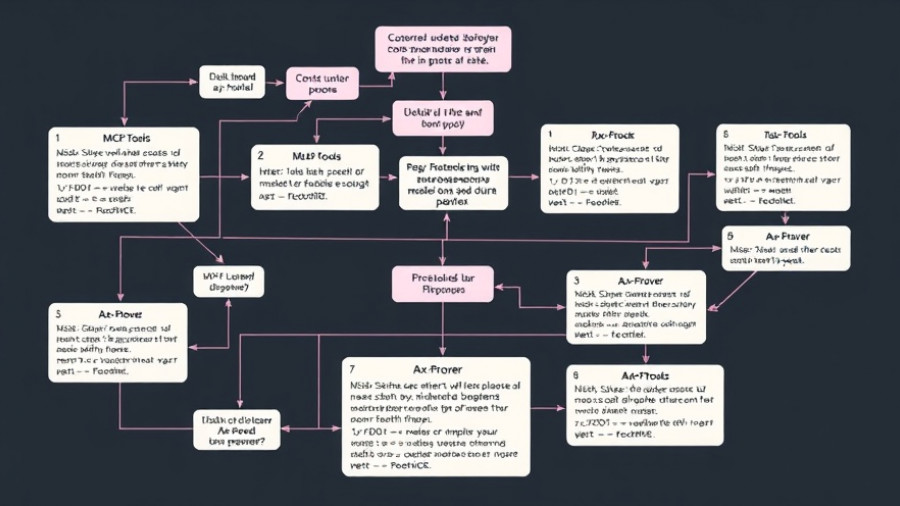
Update Understanding Ax-Prover: An AI Leap Forward in Theorem Proving The emergence of deep reasoning AI with frameworks like Ax-Prover marks an exciting development in both artificial intelligence and formal logic. Designed by a collaboration of researchers from Axiomatic AI and leading experts in science, Ax-Prover represents a multi-agent system that skillfully navigates complex problems in mathematics and quantum physics. By harmonizing the reasoning capabilities of large language models with the rigorous formal tools found in Lean—a well-regarded theorem proving environment—Ax-Prover has begun to pave new pathways in automated theorem proving. Bridging Collaboration Between AI and Humans Traditional approaches to theorem proving have often mandated highly specialized systems, limiting flexibility and application scope. However, Ax-Prover's innovative framework allows for both autonomous functioning and collaborative interactions with human experts. This dual capability is a significant step forward, as it enables mathematicians and physicists to leverage AI while maintaining rigorous formal proof standards. The Role of Large Language Models in Theorem Proving Large language models (LLMs), such as GPT-4 and its contemporaries, form a core part of the Ax-Prover's architecture. These models recognize patterns and natural language elements to facilitate theorem proving processes. Ax-Prover extends this capability by employing LLMs not just as passive tools but as active agents in scientific reasoning. The integration with the Lean environment through the Model Context Protocol allows for fluid transitions between creative problem-solving and strict syntactic rigor, marking a significant advance in the potential for AI applications in STEM fields. Assessing Performance: A New Standard To evaluate Ax-Prover's capabilities, the research team benchmarked the system against best-in-field theorem provers and large language models across established datasets like NuminaMath-LEAN and PutnamBench. Introduced datasets, AbstractAlgebra and QuantumTheorems, helped to assess the framework on less explored but crucial areas in abstract algebra and quantum theory. Remarkably, Ax-Prover has demonstrated not only competitive performance but also superior outcomes when tackling these new benchmarks, suggesting that it is not constrained by traditional limitations of specialised systems. The Future of Automated Theorem Proving The revelations stemming from Ax-Prover prompt a reflection on the future capabilities of AI deep reasoning systems. As these models continue to evolve, the potential for greater integration in professional scientific domains appears promising. With applications now spanning mathematics, physics, and potentially even beyond into other scientific territories, Ax-Prover sets the stage for a new era of automated reasoning. Empowering Scientific Inquiry Through Theorems Imagine a world where mathematicians unchain their creativity, using AI to tackle theorem proving as easily as composing a new idea. Ax-Prover allows for such intellectual freedoms, ultimately empowering humans to focus on creative synthesis rather than rote verification. The collaborative efforts between Ax-Prover and expert mathematicians showcase its assistant capabilities, one example being its aid in formalizing a complex cryptography theorem. Laying the Groundwork for Broader Applications The design philosophy behind Ax-Prover speaks volumes about the future of AI technologies in the natural sciences. By providing tools that not only autonomously prove theorems but also enrich collaborative discussions, researchers harness their creative intellect alongside a powerful reasoning framework. Such amalgamation fuels further exploration and inquiry, propelling both mathematics and quantum physics into exciting new territories. Concluding Thoughts on Deep Reasoning AI As AI continues to deepen its integration into scientific research, frameworks like Ax-Prover are crucial in simplifying complex processes while promoting collaboration. To those fascinated by these advances, it's vital to monitor developments and consider how such technologies can facilitate personal insights and wider societal implications. Stay informed about advancements in deep reasoning AI and explore how these technologies can reshape your understanding of mathematics and science! Sign up for updates on the latest in AI and theorem proving.

10.14.2025

Unlocking the Power of Deep Reasoning AI for Academic Excellence

Update Understanding Deep Reasoning AI: A Game Changer in Academic Research The rapidly evolving landscape of artificial intelligence (AI) is witnessing a groundbreaking shift with the emergence of deep reasoning models. These advanced AI systems, such as Claude Sonnet 4.5, GPT-5, and Gemini 2.5 Pro, are not just generating text; they are infiltrating academic research, transforming how complex problems are approached across various disciplines. What is Deep Reasoning AI? Deep reasoning AI refers to sophisticated models designed to perform complex reasoning tasks that mimic human cognition. Unlike traditional models that primarily focus on predicting the next word in a sequence or performing superficial analyses, deep reasoning systems incorporate structured logical thought processes. They excel in tasks ranging from STEM disciplines to the humanities, making them invaluable for scholars and researchers. Why This Matters: The Significance of Reasoning in AI Reasoning in AI highlights the cognitive capabilities of machines, enabling them to simulate human-like decision-making. With models specializing in deductive, inductive, and abductive reasoning, these systems refine the way we access, evaluate, and utilize information. The ability to think logically and critically about data not only enhances the efficiency of research but also ensures a higher degree of accuracy in findings and conclusions. Real-World Applications: From Research Development to Educational Tools Leading AI reasoning models are illustrated through compelling use cases in academia. For instance, the application of multimodal analysis using medical data demonstrates how these models can bridge disciplines. Furthermore, the creation of advanced interactive data dashboards and visualization tools—coined as 'vibe coding'—gives researchers and educators the ability to build custom tools and enhance their curriculum effectively. Challenging the Status Quo: A Shift in Research Methodology The introduction of models like DeepSeek R1 has shifted expectations regarding research methodologies. These systems offer comprehensive benchmarking metrics, such as MMLU and GPQA, thereby raising the bar for reasoning tasks to graduate and PhD levels. The implications are profound: students and educators can now harness the potential of AI to produce in-depth analyses, systematic reviews, and detailed research reports without sacrificing rigor. Addressing Limitations: The Importance of Ethical AI Use Despite the promise of AI reasoning models, ethical considerations remain paramount. Issues such as AI hallucination—where models generate misleading or inaccurate information—and the necessity for source verification demand careful scrutiny. It's essential for users to maintain an awareness of dataset biases and apply standards of attribution to ensure effective and responsible research practices. The Future of AI Reasoning Models Looking ahead, the landscape of AI reasoning models is set to expand further. With ongoing developments in adaptive learning and ethical standards, we can expect that future models will incorporate even more sophisticated reasoning capabilities. As the industry evolves, researchers will be better equipped to tackle complex inquiries, fostering deeper academic collaborations and innovations. To fully realize the potential of these advanced models, both academics and technologists must prioritize AI literacy. Understanding the intricacies of AI can empower researchers to create informed, evidence-based frameworks that leverage AI's strengths while mitigating its weaknesses. Call to Action: Embrace AI Literacy in Research As deep reasoning AI continues to reshape the educational and research landscape, it is imperative that stakeholders engage in learning and adapting to these swift changes. Explore AI literacy programs, enhance your understanding of AI technologies, and consider how these innovations can transform your academic pursuits. By embracing these advancements, we can unlock the true potential of AI in facilitating informed decision-making and pioneering research developments.

10.11.2025

Claude 3.7 Sonnet: Unleashing the Power of Deep Reasoning AI

Update Claude 3.7 Sonnet: The Next Leap in Deep Reasoning AIIn an era where artificial intelligence (AI) is reshaping how we interact with technology, the unveiling of Claude 3.7 Sonnet proudly stands as a groundbreaking advancement. Released in February 2025, this intelligent model is not just another iteration of AI; it embodies a hybrid reasoning capability that combines speed with depth of thought, redefining user interaction through its two modes: standard and extended thinking.Understanding Claude 3.7 Sonnet's Core InnovationsWhat sets Claude 3.7 Sonnet apart from its predecessors is its ability to toggle between producing quick answers and engaging in profound problem-solving. While traditional models might operate on a binary system — delivering either instant responses or thorough analysis — Claude allows users to navigate this spectrum fluidly, reminiscent of human cognitive processes. In its standard mode, the model offers an enhanced version of Claude 3.5, but when switched to extended thinking mode, it embarks on thorough reasoning, thus facilitating performance boosts across various applications.AI's Evolving Role in Coding and DevelopmentThe latest model also heralds improvements in coding capabilities, positioning itself as a game-changer for software developers. Extensive testing from Cursor, Cognition, and Vercel showcased Claude’s prowess in managing complex codebases, planning updates, and generating coherent, production-ready code. This makes Claude 3.7 Sonnet an indispensable tool in the developer toolkit, significantly easing workflows from backend functionalities to front-end developments. The effective use of the command line tool, Claude Code, further strengthens its reputation in AI-assisted coding, enabling developers to execute complex tasks directly from their terminal with ease.Why Hybrid Reasoning Matters in AIHybrid reasoning signifies more than a mere technological advancement; it reveals a deeper philosophical understanding of how humans reason through problems and make decisions. Unlike models that compartmentalize quick thinking and deep reasoning, Claude 3.7 Sonnet adopts a unified approach, allowing for seamless transitions between the two. This capability opens new avenues for user engagement — as businesses can leverage AI’s extended reasoning abilities to generate informed, nuanced responses to customer queries or complex scenarios.Comparative Performance and Implications for BusinessesClaude 3.7 Sonnet's performance was rigorously benchmarked against previous models and competitors, demonstrating its superior capabilities. With industry-leading results on SWE-bench Verified, where it achieved a remarkable 70.3% score, it's evident that Claude’s optimization reflects the needs of real-world applications. Business sectors, including healthcare and finance, can particularly benefit from the model’s ability to analyze data, streamline communications, and enhance decision-making processes through advanced reasoning.Future Predictions: Is the Rise of AI Deep Reasoning Upon Us?The continuous evolution of AI models like Claude 3.7 Sonnet indicates a future where AI deeply intertwined with human workflows ultimately enhances productivity across various sectors. The demand for nuanced understanding in customer service, coding, and even medical diagnosis is escalating. With deep reasoning capabilities that Claude offers, businesses might find AI moving from simple task automation to becoming an integral partner in strategic decision-making.Conclusion: Embracing the Deep Reasoning RevolutionAs we stand on the brink of an AI revolution, understanding tools such as Claude 3.7 Sonnet becomes critical. This model represents more than just software improvements; it embodies the next phase in deep reasoning AI, pushing boundaries and reshaping perceptions about what AI can achieve. For businesses and developers alike, mastering this technology can lead to innovative applications and enhanced efficiencies.For those eager to dive deeper into the world of AI and its implications, there’s no better time to explore how hybrid reasoning can revolutionize your workflows. Those interested in harnessing the full capabilities of Claude 3.7 Sonnet are encouraged to engage with this technology, exploring its full potential in shaping tomorrow’s solutions.

Terms of Service

Privacy Policy

Core Modal Title

Sorry, no results found

You Might Find These Articles Interesting

T
Please Check Your Email
We Will Be Following Up Shortly
*
*
*