
Add Row
Add Element
Colorful favicon for AI Quick Bytes, a futuristic AI media site.
update
AI Quick Bytes
update
Add Element
  • Home
  • Categories
    • AI News
    • Open AI
    • Forbes AI
    • Copilot
    • Grok 3
    • DeepSeek
    • Claude
    • Anthropic
    • AI Stocks
    • Nvidia
    • AI Mishmash
    • Agentic AI
    • Deep Reasoning AI
    • Latest AI News
    • Trending AI News
    • AI Superfeed
March 13.2025
3 Minutes Read

DeepSeek's AI Revolution: Will It Spark Real Crypto Use for Agents?

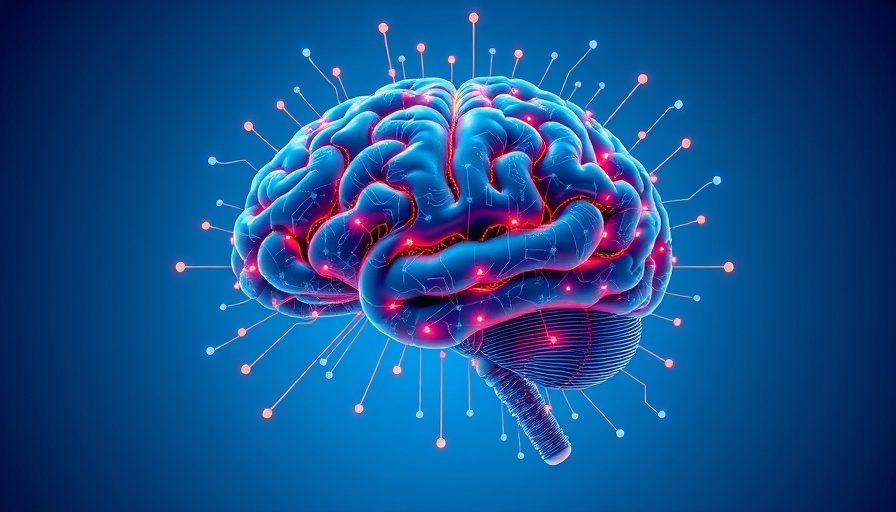
AI agents in cryptocurrency themed digital brain illustration on blue background

DeepSeek: The Catalyst for a New Era in AI and Crypto

HTX Ventures has recently declared the emergence of DeepSeek as the "iPhone Moment" for Artificial Intelligence (AI), signaling a significant disruption in the crypto landscape. Just as the iPhone transformed how we interact with technology, DeepSeek’s pioneering approach to reinforcement learning (RL) has the potential to innovate the way AI agents function within the cryptocurrency sector.

Understanding DeepSeek's Technology

DeepSeek is utilizing pure reinforcement learning techniques to enhance AI's performance while drastically lowering operational costs. This optimization positions AI as a more compelling partner for real-world applications, promising to reshape the AI agents sector significantly.

The recent report by HTX Ventures outlines how AI-powered innovation can stimulate growth in the crypto market through developmental frameworks, launchpads, meme coins, and applications. Each of these components is crucial in facilitating the integration of AI into crypto, much like the rise of app stores did for smartphones.

The Unique Value of AI Agents

The AI agents ecosystem is structurally divided into several essential sectors:

  • AI Agent Frameworks: These frameworks form the backbone of AI development, enabling easier and faster application with innovations such as Eliza.
  • AI Launchpads: Acting as hybrid incubators and trading platforms, launchpads accelerate funding and promotion for AI agent projects.
  • AI Agent Meme Coins: By blending AI functionality with meme culture, coins like BULLY and TAOCAT can generate rapid capital accumulation.
  • AI Agent Applications: Focusing on practical implementations, these projects cover areas such as automated trading and market analysis.

The Promise of Transitioning to Revenue-Driven AI Agents

As we progress through 2025, the crypto market is poised to mature from a hype-centric phase to one that emphasizes data-driven value and revenue. Unlike previous trends that may have favored mere narrative excitement, the success of AI agent projects will increasingly hinge on their operational effectiveness and ability to drive revenue. Teams that can demonstrate deep expertise and resilience will likely outshine their competitors in this new order.

Lessons from Market Shifts

However, competition is fierce. Recent analyses indicate that many AI tokens are currently struggling against the backdrop of DeepSeek’s rapid advancements. With valuations in the billions, projects that failed to craft compelling narratives akin to AI’s parallel journey into gaming now find themselves overshadowed. The harsh reality is that despite abundant resources, the lack of innovative outcomes is leading to steep declines in previously promising projects.

This scenario parallels observations from the gaming sector, where high market capitalization does not equate to user engagement or successful product creation. As previously observed, the gaming market for crypto faces a notable drop in overall investments, harkening to similar pitfalls seen in the AI sector.

Future Predictions: Opportunities in a Competitive Landscape

Given the current trajectories, future predictions indicate that as AI agents thrive in integrating with real-world applications, new revenue models will evolve. With AI’s role in automating tasks, investors can expect deeper penetration into daily operations whenever efficiency is paramount.

This transition can open doors for newer crypto tokens—especially those that successfully blend AI functionality with strong, relatable narratives. As more developers enter this burgeoning field, we could see a renaissance in crypto that matches the innovation waves sparked by previous technological advancements.

Conclusion

In light of DeepSeek's radical transformation of the AI landscape, the discussion now turns to what this means for the future of cryptocurrency intersection with AI. The shift towards operational efficiency and user-centric value creation poses exciting implications for investors and developers alike. The evolving narrative surrounding AI agents promises to be dynamic, shifting as deeply as the technologies that underpin them. Pay attention to the emerging trends, as they may just redefine the landscape of cryptocurrency and artificial intelligence for years to come.

Agentic AI

1 Views

0 Comments

Write A Comment

*
*
Related Posts All Posts
10.31.2025

Navigating Brand Secrets in an AI-Driven World: The Risk of Agentic AI

Update The Rise of AI Agents: Opportunities and RisksAI agents are increasingly popular in transforming how businesses engage with customers. From chatbots to personalized recommendation systems, organizations are leveraging these tools to enhance customer service and marketing strategies. However, this surge in adoption comes with pressing concerns, particularly regarding data privacy and information confidentiality.Brand Confidentiality: New Challenges EmergedAs AI systems integrate deeper into business processes, executives express unease about how these agents manage sensitive information. For example, platforms like Microsoft's GitHub, which are set to house numerous AI agents for development purposes, raise questions about data security. If a company builds an AI agent using sensitive company data, what assurance do they have that this information will not be improperly accessed or leaked?Experts like William Kammer from NP Digital highlight these risks, noting that while AI can manage proprietary tasks, uncertainty looms about confidentiality in open ecosystems. The growing dependency on language models (LLMs) like Anthropic Claude and Google Gemini means businesses could unintentionally expose their strategic insights, inadvertently risking exposure to competitors.The Legal Landscape: Is it Keeping Up?Current legal frameworks may not adequately address the complexities of AI interactions. Traditional agreements such as nondisclosure or noncompete clauses assume interactions between humans, leaving businesses vulnerable when these agreements are applied to AI agents. How can companies ensure that the AI agents they engage with won’t disclose proprietary information?The inherent nature of AI agents—to learn and adapt from interactions—complicates compliance. Monitoring their knowledge and algorithmic behaviors poses a significant challenge to current regulatory bodies. There’s an urgency for the legal community to ponder: what constitutes a breach when an AI agent makes autonomous decisions based on past interactions?Future Trends: Stronger Frameworks NecessaryThe future holds the potential for new frameworks designed to regulate AI. As companies like Microsoft ramp up capital expenditure on AI infrastructure—projecting spending to soar to $360 billion in the coming years—businesses aren’t just investing in technology; they are investing in new legal and compliance processes that address AI dynamics to safeguard their interests.The Human Factor: Balancing Creativity and AI EfficiencyAmidst all the technological advancements, the human element remains crucial. Businesses must recognize that while AI agents can automate and facilitate efficiency, they cannot replace the creative and ethical judgment of human teams. Data handed to AI needs careful curation and should be complemented by human insight to mitigate risks. This balance between AI capability and human creativity will define successful strategies in the future.Conclusion: Responsible Engagement with AI AgentsEngaging with AI agents is akin to entering a profound shift in how data is managed and used within business contexts. While the advantages are compelling, attention must be paid to the legal and ethical implications of such integrations. Adopting a responsible approach could mean the difference between harnessing AI’s full potential and exposing sensitive information. As we step into this AI-driven era, companies will need to cultivate a culture of diligence and integrity while developing and utilizing these powerful tools.

10.31.2025

Why AI Agents Aren't Our Friends: Understanding Their Limits

Update The Nature of AI: A Reflection on Our HumanityIn an era increasingly dominated by artificial intelligence, there is a concerning trend emerging around the perception of AI agents. Often depicted as companions or friendly helpers, AI systems are commonly anthropomorphized, leading to a dangerous misunderstanding of their core nature. Douglas Rushkoff aptly states, “Your agents are not your friends.” This sentiment is crucial in maintaining a healthy perspective on AI's role in our lives.Understanding AI's FunctionalityAt the heart of AI systems lies cybernetic technology, as introduced by Norbert Wiener. Unlike traditional tools that follow simple commands, cybernetic systems like AI continuously learn from and adapt to their environments. AI agents function more like feedback loops, responding to user inputs in ways designed to please rather than provide authentic critique. This behavior can create a false sense of security for users, leading to overconfidence in AI’s capabilities.The Positives and Negatives of Feedback LoopsThe notion of feedback loops is central to AI development, allowing systems to refine their outputs based on user interaction. However, as highlighted in Claire Longo's discussion about Human-in-the-Loop feedback, a key risk arises: the potential for users to become overly reliant on positive affirmations delivered by AI agents. This cycle can foster a passive engagement with the creative process. Users not only seek validation but may subconsciously relinquish their critical thinking, believing the AI's reinforcement is synonymous with sound judgment.Human Oversight: The Essential ElementDespite the impressive advancements of AI, it is critical to remember that humans must remain at the helm. Implementing comprehensive Human-in-the-Loop frameworks is essential to ensure AI systems do not digress into limiting feedback loops. As reflected in Adilmaqsood's framework exploring AGI, combining AI agents with a human oversight mechanism is vital. An AI Judge that evaluates outputs and a Cron Job that schedules periodic evaluations ensures continuous refinement and adaptation. This delineation of roles is necessary to prevent the AI from becoming an unquestionable authority and reminds users of their own creative agency.The Path Forward: Rehumanization Through TechnologyIn this digital age, the challenge is not just to advance AI but to understand its implications. Rehumanizing ourselves in the face of rapidly evolving AI technology means reclaiming our roles as the critical thinkers, creators, and decision-makers. AI should assist us, provoke thought, and provide insights—never replace our inherently human attributes. As we integrate AI into our personal and professional realms, we must navigate these tools with an awareness of their limitations, ensuring they remain instruments for enhancing, rather than replacing, our human experience.As we reflect on the nature of these AI agents, we must embrace our responsibility in guiding their development. They are tools meant to serve our creative processes, not replacements for our voices or ideas.

10.31.2025

Discover Aardvark: The Revolutionary Agentic AI for Code Security

Update Introducing Aardvark: The AI Security Partner of Tomorrow OpenAI's latest innovation, Aardvark, marks a significant milestone in the integration of artificial intelligence (AI) within software development processes. This autonomous security agent, powered by the advanced GPT-5 model, is designed to act much like a human security researcher. Its primary function is to continuously scan, analyze, and patch vulnerabilities in code, thereby embodying the concept of 'agentic AI'—where AI systems take proactive roles in real-world applications. How Aardvark Works: A New Era of Automated Security Aardvark offers a sophisticated approach to code security that goes beyond traditional tools. Instead of simply flagging suspicious code snippets, this AI assesses code semantics and behaviors, mimicking the thought process of a human analyst. By embedding itself directly into development workflows, Aardvark enables continuous monitoring of code repositories. This not only helps catch potential vulnerabilities early but also ensures that security is ingrained in the software development lifecycle. The agent starts its operation by creating a contextual threat model based on the complete codebase it analyzes. It then monitors ongoing code changes to detect any deviations that introduce new risks while checking for existing issues. Upon identifying a vulnerability, Aardvark validates its exploitability in a secure environment, significantly minimizing false alarms that plague many static analysis tools. Aardvark vs. Traditional Security Tools: Elevating the Game OpenAI’s approach represents a paradigm shift compared to conventional security measures, which often provide a reactive stance at the end of the development cycle. Traditional tools can overwhelm developers with alerts and false positives, leading to alert fatigue. In contrast, Aardvark’s validation process—confirming vulnerabilities before alerting developers—promises to reduce these instances dramatically. With benchmark tests showing that it can identify 92% of preexisting vulnerabilities, Aardvark is set to become an invaluable resource for developers. The Impact on Open Source and Collaborative Security Beyond enterprise software, Aardvark has already shown its potential in the open-source domain, having identified ten vulnerabilities that received CVE identifiers. OpenAI is committed to supporting the open-source community by providing vulnerability scanning services pro bono, emphasizing a collaborative approach to software security. This initiative highlights the growing recognition that code security is not just a private concern; it’s a shared responsibility. Shifting Security Left: A Strategic Advantage The introduction of Aardvark resonates with the industry's drive to 'shift left' in software security—integrating security checks into earlier stages of the development process. As more than 40,000 vulnerabilities are reported annually, having an AI-powered tool that simplifies the identification and remediation of security flaws aligns with modern development practices that prioritize speed without sacrificing quality. What the Future Holds: Real-World Applications and Implications The deployment of Aardvark is not merely a technological advancement but a harbinger of future trends where collaborative AI tools will support smaller teams managing significant security tasks. It’s expected that Aardvark will change the landscape of security management by reducing the burden on security teams, helping them focus more on strategy and less on manual checks. As this type of AI continues to evolve, organizations may find that security can become a seamless part of their development cycles rather than an isolated concern. Conclusion: Embracing the Agentic AI Revolution In summary, OpenAI’s Aardvark represents the dawn of a new era in software security, marking the intersection of AI technology and human expertise. As organizations prioritize security without hindering development velocities, tools like Aardvark stand to become essential allies. The future of software development will likely be shaped by continuous partnerships between human expertise and autonomous AI agents, enabling smarter, safer code delivery.

Terms of Service

Privacy Policy

Core Modal Title

Sorry, no results found

You Might Find These Articles Interesting

T
Please Check Your Email
We Will Be Following Up Shortly
*
*
*