
Colorful favicon for AI Quick Bytes, a futuristic AI media site.
update
AI Quick Bytes
update
  • Home
  • Categories
    • AI News
    • Open AI
    • Forbes AI
    • Copilot
    • Grok 3
    • DeepSeek
    • Claude
    • Anthropic
    • AI Stocks
    • Nvidia
    • AI Mishmash
    • Agentic AI
    • Deep Reasoning AI
    • Latest AI News
    • Trending AI News
    • AI Superfeed
March 12.2025
3 Minutes Read

TSMC's Bold Move: A Joint Venture with Intel and Tech Giants

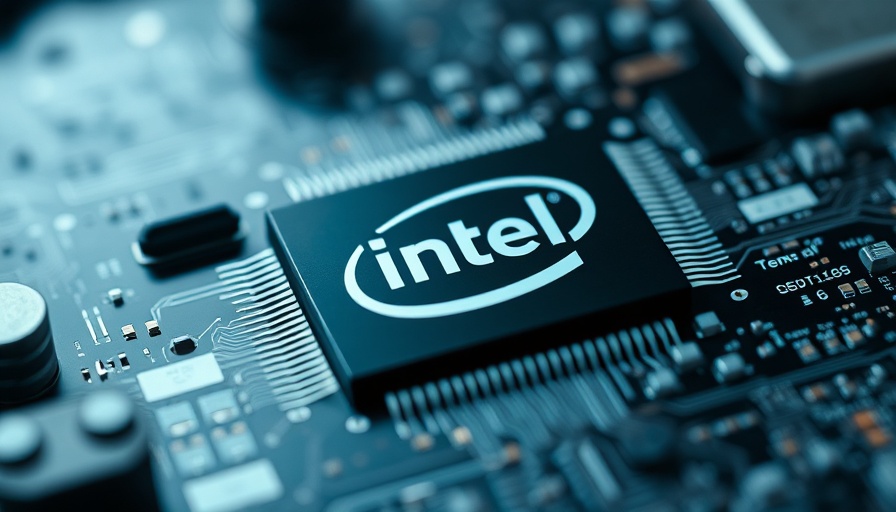
Intel microchip closeup, advanced tech in TSMC Intel joint venture

TSMC's Strategic Pitch: A New Era for Intel?

In the fast-paced world of semiconductor manufacturing, a potential shift is on the horizon as Taiwan Semiconductor Manufacturing Company (TSMC) approaches major U.S. chip designers including Nvidia, AMD, and Broadcom about a prospective joint venture involving Intel's struggling foundry division. Reports indicate that TSMC is seeking to take a stake of no more than 50% in this collaboration, aimed at revitalizing Intel's operations in a situation that has sparked significant interest across the tech landscape.

Understanding the Landscape: Why Intel Needs Support

The U.S. chipmaking industry is at a critical juncture, especially for a legacy giant like Intel. Following a staggering loss of $18.8 billion in 2024, the company has seen its stock price tumble, losing over half its value year-over-year. In light of these challenges, this proposed partnership could be pivotal for Intel, potentially providing the operational expertise of TSMC without losing complete control over its foundry division. This joint endeavor is not merely a lifeline for Intel but also presents a unique opportunity for collaborating companies to leverage advanced manufacturing capabilities.

The Political Dimension: Trump’s Influence on Semiconductor Manufacturing

Adding another layer of complexity is the involvement of the Trump administration. Sources indicate that TSMC's overtures to backers come at the request of U.S. policymakers, who are keen to bolster domestic advanced manufacturing capabilities. With the Trump administration wary of a fully foreign-controlled Intel, any agreement will require federal approval, necessitating a careful balancing act between foreign investment and national interests. The stakes are high, as successful collaboration could set an example for future partnerships in this vital industry.

Current Dynamics in the Semiconductor Field: Allies and Rivals

The nature of the partnerships being proposed highlights existing rivalries and competition in the semiconductor sector. Companies like Nvidia and AMD have historically been competitors to Intel, yet this joint venture could alter the dynamics. As both firms look to Intel’s advanced manufacturing processes — such as its 18A technology — they find themselves in a unique position where collaboration may offer benefits that outweigh the risk of competition.

Future Predictions: What Could This Mean for the Tech Market?

If this partnership comes to fruition, we could witness a significant realignment within the semiconductor market. TSMC's ability to implement best practices and advanced technology could transform Intel's operational abilities, leading to a potential resurgence. Moreover, as AI applications continue to rise, increasing the demand for semiconductors, successful collaboration may place the U.S. players in a stronger position to compete globally against rivals in Asia and beyond.

Emotions and Reactions from Industry Leaders

The potential for this partnership has sparked excitement and apprehension within the technology community. Industry insiders recognize that while the collaboration could mitigate Intel's troubles and usher in a “new era,” it also comes with risks, particularly associated with cooperative manufacturing and the sharing of proprietary technologies. Such partnerships demand trust and transparency, often challenging given traditional competitive dynamics.

As the dialogue evolves and discussions progress, all eyes will be on how these tech giants navigate their historical rivalries to potentially pave the way to innovation and advancement. Enthusiasts of artificial intelligence and entrepreneurs in the tech space will want to keep a close watch on these developments, as they can significantly influence future trends in AI and semiconductor technology.

Call to Action: Stay Informed on Tech Developments

As the landscape of semiconductor manufacturing evolves, it’s crucial for tech enthusiasts and professionals alike to stay ahead of the curve. Keep an eye on how these partnerships unfold, and consider the broader implications on technology and innovation. Follow trends and insights in the semiconductor and AI sectors to better understand what to expect in this transformative era.

AI Stocks

2 Views

Write A Comment

*
*
Please complete the captcha to submit your comment.
Related Posts All Posts
05.23.2026

Nvidia’s $3.2 Billion AI Optics Pact With Corning: Changing Futures in Tech

Update Nvidia and Corning: A Game-Changing Collaboration The tech industry is buzzing after Nvidia announced a staggering $3.2 billion investment into Corning, a leader in optical technology. This partnership is not just remarkable for the dollars involved but holds significant implications for AI infrastructure development in the United States. By integrating advanced optical solutions into its data operations, Nvidia is set to revolutionize how artificial intelligence applications are deployed and scaled. Understanding the Impact of Optical Technologies At the heart of this deal is the promise of optical technologies, which allow data to travel faster and with greater efficiency compared to traditional copper wiring. As Nvidia gears up to replace copper in its AI data centers, Corning's optical glass fibers will form the backbone of this infrastructure, speeding transmissions and cutting energy usage. This shift will not only reduce operational costs but could potentially lead to a significant increase in AI processing power. A Deep Dive into Economic Implications This strategic alignment also signals a robust push for domestic manufacturing in the U.S. With plans to create three new optical manufacturing plants in North Carolina and Texas, the partnership will generate approximately 3,000 jobs. The move reflects a broader trend of tech companies investing heavily in U.S. infrastructures, following the explosion of interest in AI post-release of systems like OpenAI’s ChatGPT. The Reshaping of Investment Narratives Nvidia's substantial investment is likely to significantly alter the investment landscape for both companies. Analysts have been eager to emphasize that this expansion could elevate Corning to a core supplier status within the AI ecosystem, augmenting its relevance in a market that is expected to grow exponentially over the next decade. While Corning's stock price has surged over 300% within the last year, this partnership could lay the groundwork for even greater performance, pushing revenue and profits to new heights. Future Trends in AI Infrastructure The collaboration between Nvidia and Corning is a clear indicator of future trends where optical technologies will play a crucial role, as industries increasingly rely on enhanced communication systems. With AI driving unprecedented infrastructure demands, companies like Nvidia are positioning themselves ahead of competitors by investing in technologies that not only improve speed but also energy efficiency. Investing in AI: A Cautious Perspective However, investors should proceed with caution. The tech market is unpredictable, and while the growth prospects are robust, potential policy changes and market fluctuations could impact the profitability of such bold moves. Analysts warn that heavy expectations might expose Corning and its partners to volatility in sentiment, especially if the anticipated AI demand does not materialize as expected. Concluding Thoughts on the Nvidia and Corning Relationship This strategic partnership represents a pivotal moment in the AI arena. With the backing of Nvidia, Corning is poised to enhance its operational capabilities immensely. For AI enthusiasts and investors alike, this collaboration is not merely about hardware upgrades but about the vision of a future where AI infrastructure is robust, efficient, and sustainable.

05.23.2026

Exploring Why Nvidia is the Ideal Investment for AI Enthusiasts

Update Why Nvidia Is Leading the AI Charge Nvidia has emerged as a powerhouse in the technology sector, especially in the realm of artificial intelligence (AI). Many investors and tech enthusiasts are buzzing about the company's explosive growth, which has catapulted its stock to a valuation of nearly $1 trillion. This meteoric rise, nearly 163% since the start of 2023, is attributed significantly to the demand for graphics processing units (GPUs), which are essential for AI workloads. Assessing Nvidia's Valuation Currently trading at a price-to-earnings ratio that vastly outpaces even giants like Amazon, Nvidia's valuation raises some eyebrows. Priced at approximately 204 times its earnings, it's evident that investors are banking on substantial future growth. This perspective aligns with the findings from industry experts who believe Nvidia is at the helm of a technological revolution that could redefine various sectors, from healthcare to finance. Investor Sentiment: The AI Boom It's crucial for investors to understand the driving forces behind Nvidia's stock price. The rise of AI has spurred unprecedented spending among tech companies eager to harness its potential. Nvidia's GPUs are the gold standard for running AI applications, making it a compelling choice for tech enthusiasts looking to get in on the action. Industry analysts warn, however, that with great potential comes volatility. Investors should be prepared for fluctuations as market dynamics shift. The Future of Nvidia: Predictive Insights Nvidia's current growth trajectory shows no signs of slowing. Revenue projections indicate a staggering 63% increase for the fiscal year 2026, with growth expected to taper slightly to 52% in 2027. Long-term, the global data center spend is expected to skyrocket to between $3 trillion and $4 trillion by 2030, underlining Nvidia's potential to remain at the forefront of this industry shift. Investing at this stage may very well set the foundation for significant returns long-term. Weighing Risks and Rewards Investing in high-growth stocks like Nvidia is not without challenges. Investors are advised to prepare for possible downturns, especially given the stock's premium valuation and the volatility that comes with it. As highlighted in reports, stocks trading at high multiples tend to be more susceptible to market corrections. However, experts suggest maintaining diversified portfolios to mitigate these risks. Conclusion: Should You Invest Now? The prospects for Nvidia are promising, but potential investors must conduct thorough research and be ready for the inherent risks of investing in such a dynamic market. By leveraging its leading position in AI technology, Nvidia stands to reward those who are willing to invest strategically. Should you choose to invest, consider limiting your individual stock exposure to balance risk while capturing the benefits of this tech giant.

05.23.2026

Nvidia vs. Cerebras: Which AI Stock Is the Smarter Buy Right Now?

Update Understanding the AI Chip Market Landscape The recent surge in artificial intelligence has created a competitive landscape for companies involved in AI chip manufacturing. Among the key players in this market are Nvidia and the newcomer Cerebras Systems. Nvidia has long led this sector, capitalizing on its powerful graphics processing units (GPUs), while Cerebras aims to disrupt the industry with its innovative wafer-scale chips. For AI enthusiasts, understanding the strengths and market positions of these two companies is crucial as they reshape technology's landscape. Nvidia: The Established Leader Nvidia has dominated the AI chip market for years. Its GPUs are essential for training and deploying AI models, setting the standard for performance. In the past five years alone, Nvidia's stock has surged by 1,500%, reflecting its strong earnings growth and profitability. In the recent fiscal year, the company's revenue reached an astonishing $215 billion, a massive leap from $27 billion three years ago. This evolution has been fueled by partnerships across industries, expanding its market footprint in sectors like telecommunications and automotive. Cerebras: The Rising Contender In stark contrast, Cerebras Systems, a newer entrant, has made a significant impact in a short time. Following its IPO, which raised over $5.5 billion, Cerebras's market capitalization reached nearly $67 billion, instantly positioning it as a competitor to Nvidia. Its wafer-scale chips, known for their significant size and speed, can deliver performance up to 15 times faster than leading GPU-based solutions. With major contracts—including a substantial partnership with OpenAI—Cerebras is capitalizing on its unique technological offerings. The Chip Innovation Race: Speed Matters One distinct advantage Cerebras boasts is its capability to perform inference at incredible speeds. Inference has become the critical focus for businesses deploying AI, as models transition from training to real-world use. As workloads move toward inference, analysts predict that this phase will account for a staggering 80% of AI tasks by 2027. Cerebras's impressive performance metrics could give it a significant edge as demand for swift processing continues to rise in the AI market. Market Demand: AI's Expanding Ecosystem The increasing application of AI in various industries is fueling unprecedented demand for computing power. Gartner predicts that the AI market could reach up to trillions of dollars in the coming years, making this an opportune moment for both Nvidia and Cerebras. As enterprises seek to leverage the power of AI, there's a clear need for efficient and high-performance chips. Investment Considerations: Which Stock to Choose? For investors contemplating between Nvidia and Cerebras, both companies offer unique opportunities. Nvidia, with its established reputation and industry dominance, presents a safer, albeit potentially less explosive, investment avenue. Conversely, Cerebras—despite its recent successes—carries more risk given its youth and the inherent volatility of tech markets. Therefore, investors may consider a wait-and-see approach to Cerebras while recognizing Nvidia’s consistent growth trajectory. Future Outlook: The Battle Continues The rivalry between Nvidia and Cerebras exemplifies the broader technological competition in the AI landscape. With rapid advancements in AI and processing technologies, both companies will continue to innovate. For AI enthusiasts and investors alike, this duel represents not just a race for profits but also a pivotal moment in AI's progression, bringing forth transformative applications that could redefine industries. In conclusion, whether you favor the stability of Nvidia or the revolutionary potential of Cerebras, understanding the underlying technologies and market positioning of these companies will be essential as they navigate the ever-evolving AI frontier. Take action by exploring investment options in the thriving AI market. Equip yourself with knowledge and stay ahead in this dynamic landscape!

Terms of Service

Privacy Policy

Core Modal Title

Sorry, no results found

You Might Find These Articles Interesting

T
Please Check Your Email
We Will Be Following Up Shortly
*
*
*